
When we look out over a perfectly even, short-mown city park, our brains are trained to see a healthy slice of “nature.” But if you look at that same patch of grass through the eyes of a wild bee, a butterfly, or a grasshopper, you won’t see an oasis. You will see a biological desert.
As the European Commission pushes forward with its Biodiversity Strategy for 2030 and the subsequent Nature Restoration Law (2022), a harsh reality has come to light: approximately 80% of natural habitats across the EU are currently in poor condition. While we often look to distant forests or oceans for conservation efforts, the front line of this ecological battle is actually in our backyards, public parks, and city squares.
Urban green spaces cover an estimated 22% of the EU’s land area. They are critical for human psychological and physical well-being. But a green space is only as healthy as the life it supports, and right now, the obsession with the “perfect lawn” is suffocating that life.
The Problem of the Practice: The “Prestige” Trap
For decades, urban landscape management has been dictated by an aesthetic of total control. Short, frequently mowed lawns—often designed for recreation but largely left unused—have become societal symbols of wealth, prestige, functionality, and order.
However, this intensive management comes at a staggering, often invisible, ecological cost:
- The Insect Massacre: Rapid, highly mechanized mowing on a warm day isn’t just cutting grass; it is an extinction event for local fauna. Studies show that a single intensive mowing session can eliminate up to 50% of the insect population in a flowering meadow.
- The “Rotary” Effect: Standard rotary mowers are particularly destructive. They don’t just slice; they shred. This kills insects caught in the machinery and obliterates the taller forbs, flowering structures, and seed heads that pollinators depend on for survival.
- Microclimate Collapse: Short grass loses moisture incredibly fast. This alters the local microclimate, dropping humidity levels and reducing overall biomass. This loss of vegetation structure makes urban ecosystems incredibly fragile.
- The Chemical Cycle: Because these weakened lawns lose their natural resilience, they become highly vulnerable to invasive pest species. To combat this, municipalities and property owners often resort to environmentally harmful fertilizers and pesticides. This triggers a vicious cycle of ecological degradation that ultimately contributes to higher greenhouse gas emissions.
The Untapped Potential of Our Cities
It is easy to assume that cities and nature are inherent opposites, but this is a dangerous misconception. Urban ecosystems offer a mosaic of small habitats that, in some cases, provide even more biodiversity than surrounding rural areas dominated by monoculture farming.
Take Berlin, for example, where public green spaces account for more than 30% of the geographical area. Vast portions of this land remain completely unused by the public, yet they are subjected to the same aggressive mowing regimes as high-traffic recreational areas. If managed appropriately, these spaces hold massive potential for local and regional species conservation.
Shifting the Policy Needle: What Can Be Done?
The science is clear, and pioneering municipalities in Germany—such as Bayreuth, Hof, Büdelsdorf, and Tübingen—are already proving that change is possible. However, isolated city efforts are not enough to meet the EU’s Nature Restoration targets. We need nationwide regulations grounded in these three evidence-based strategies:
- Embrace the “Slow Mow” (Reduced Frequency)
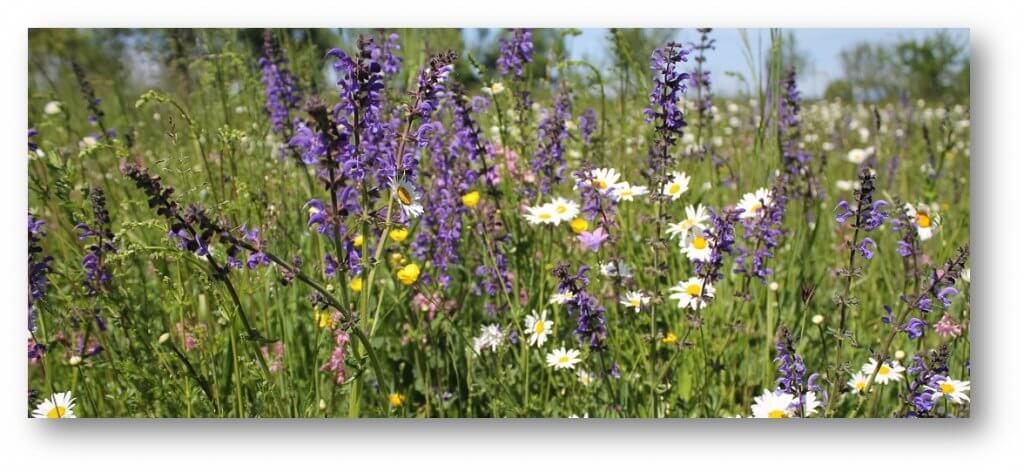
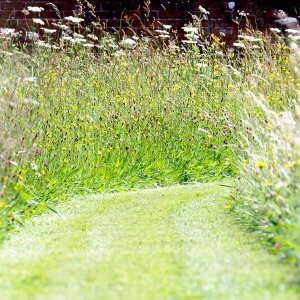
- The simplest solution is often the most effective. High-frequency mowing prevents the structural diversity that ecosystems need to thrive. By reducing mowing to just once or twice a year, we allow plant diversity to explode. Research shows a 30% increase in plant species within just six weeks of reduced mowing. Over a 25-year period, long-term reductions have yielded a 15% to 62% increase in plant diversity, providing vital feeding grounds for endangered wild bees, grasshoppers, and beetles.
- The Mosaic Method (Partial Mowing)
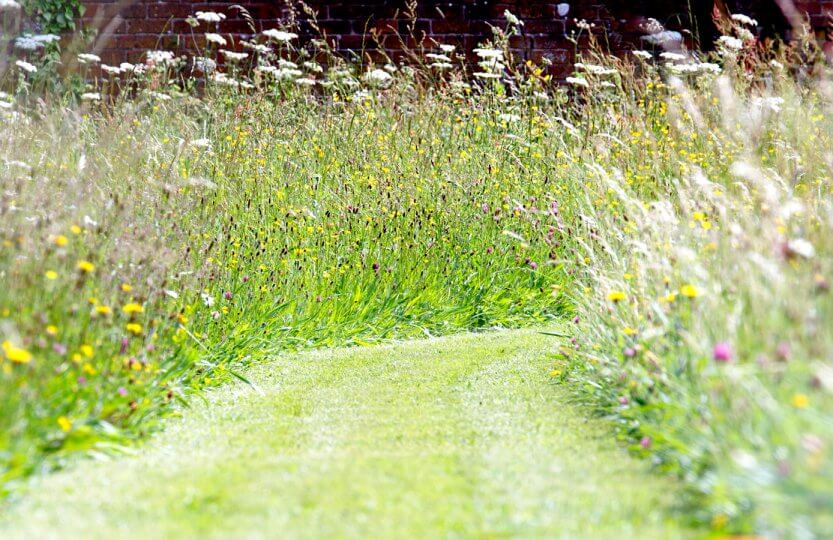
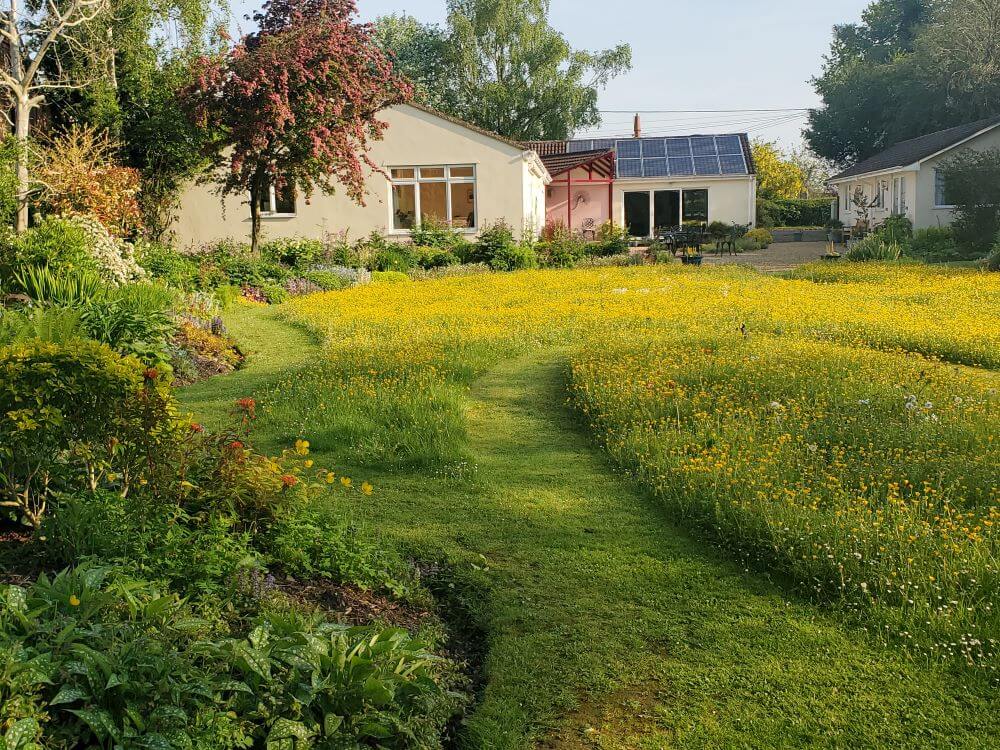
- We don’t have to abandon our parks to total wilderness. “Mosaic” or partial mowing involves leaving strategic sections of lawns completely untouched while maintaining others. This simple practice creates a network of biodiverse refuges. When the mowers come, insect communities have a safe haven to retreat to, ensuring they have continuous access to habitats and resources.
- Individualized “Mowing Concepts”
- There is no universal calendar for nature. Postponing the first mow of the year can save countless insects, but the exact timing depends heavily on local flora, fauna, and soil conditions. Cities must be required to develop localized, long-term “mowing concepts” that define appropriate schedules, phase out destructive rotary mowers, and establish transparent guidelines that allow for civil society participation.
The Public is Ready for the Wild
The biggest historical barrier to progressive lawn policy has been the assumption that citizens demand “manicured” grass and will reject anything that looks messy or overgrown.
The data proves this assumption is outdated. According to representative surveys by the Federal Ministry for the Environment, the public’s preference for “wilder” urban nature jumped from 54% in 2015 to 75% in 2019. Furthermore, over 90% of Germans believe it is our fundamental duty to protect nature.
This cultural shift is visible in the explosion of grassroots movements like “No Mow May.” Originally founded in the UK and widely embraced in Germany, this initiative aligns perfectly with the scientific consensus: taking a break from the mower in spring gives pollinators the crucial head start they need.
We are no longer bound by the outdated idea that a neat lawn is a good lawn. The civil society is already actively demanding a shift toward sustainable urban environments. Now, it is time for national policy to catch up, replacing the manicured deserts of the past with the resilient, vibrant ecosystems of the future.
- This blog was based on a policy brief made for the EU Environmental Policies and Law (POLLEN) Science School by the university of UCLouvain Saint-Louis Bruxelles, in which GCEs take part regularly.
- Sources can be shared by request
- https://www.homebuilding.co.uk/advice/are-you-ready-for-no-mow-may
- Plantlife (2024, 10. Mai) PlantLife’s no mow may movement. https://www.plantlife.org.uk/campaigns/nomowm

With a background in environmental sciences and psychology, I was looking for a master’s program that brings together natural and social science perspectives. I am happy to have found that with “Global Change Ecology”. I am especially interested in human environmental attitudes and behaviors: why people act the way they do, and how pro-environmental behavior can be encouraged.



thanks for this
Very neat blog post.Really looking forward to read more. Awesome.